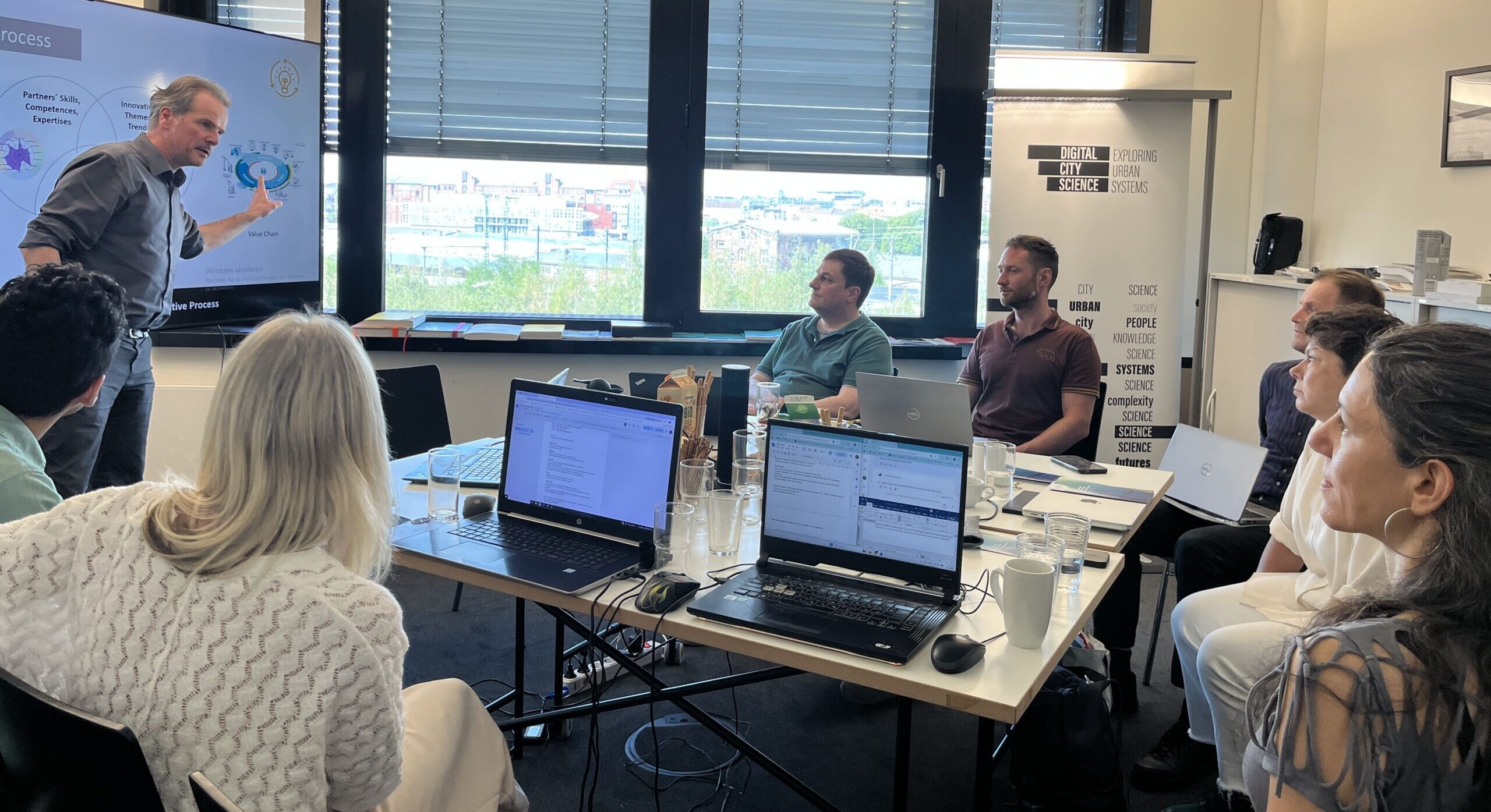
Networking and Strategy Roadmapping Workshop IV
The fourth DICE Strategy and Roadmapping Meeting, held on 16 July 2026, focused on consolidating recent developments and establishing a detailed short-term operational roadmap and long-term governance strategy for the Digital Innovation Cluster for the Built Environment. Bringing together core team members and core partners, the session reviewed progress across key initiatives, including European project proposals like the upcoming Horizon submission, digital tool integrations, and ongoing partner engagements.
A central focus of the workshop was sharpening the cluster’s vision, mission, and organizational model. Participants engaged in structured discussions to define target audience profiles, map core competencies, and evaluate cluster governance structures, assessing legal forms, financial models, and membership frameworks to ensure long-term value for both internal and external stakeholders. Discussions also highlighted strategies to expand network impact through joint pilot projects, innovation transfer, startup engagement, and active community outreach.
Through interactive roadmapping sessions, attendees established a clear timeline for key milestones across operations, innovation, and communication. Immediate actions include mapping network expertise via a core skills matrix, launching a Nextcloud platform to ensure digital sovereignty and open collaboration, releasing dedicated cluster newsletters, and introducing community-wide pitch formats. Looking further ahead, the roadmap outlines upcoming major events, such as appearances at SCCON Berlin and Smart City Expo Barcelona, leading toward an open HCU assembly in late 2026 and a comprehensive mid-term review in early 2027.
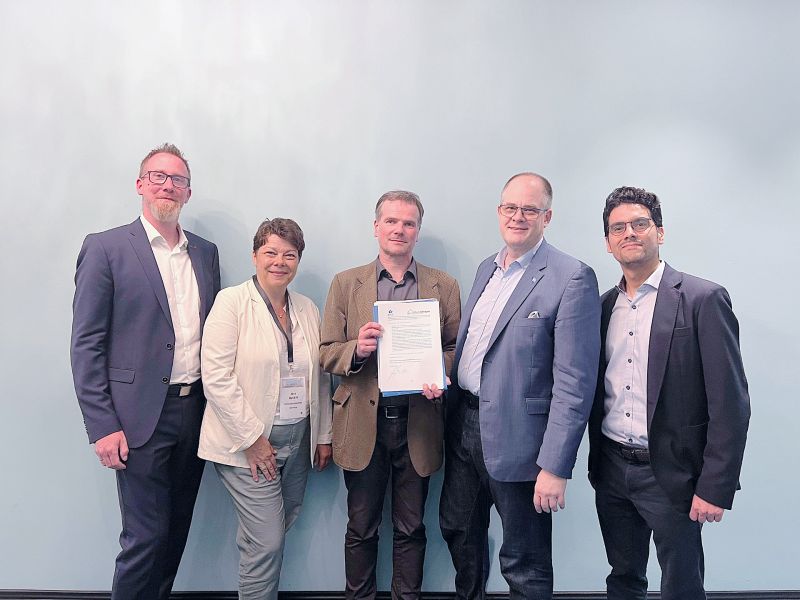
Innovation cluster DICE officially registered with the EU
The "Digital Innovation Cluster for the Build Environment" (DICE) led by HafenCity University Hamburg was officially included in the EU funding program Build4People during a Signature Ceremony on May 26th in Brussels.
In an official ceremony held on May 26, 2026 in Brussels, the "Digital Innovation Cluster for the Built Environment" (DICE) registered in the EU funding program Build4People. The Build4People funding program, based on the New European Bauhaus, supports over 30 European innovation clusters that deal with future topics in the fields of architecture, engineering and construction.
DICE is a network of stakeholders who want to close the value chain in the field of digital planning and construction - from research to practical application - and drive it forward with new innovations. This initiative stems from HafenCity University Hamburg, which manages the network organizationally and has been promoting its development from the Hamburg context for about a year. The core group of DICE, in addition to HCU, also includes Bundesverband Smart City e.V. (BVSC) , the startup UrbView, the software company integrationWorks and the BIM expert Prof. Mondino.
Beyond the core group, the network is to be expanded in the coming months and years to include DICE continuously expanded, pioneering innovation projects launched jointly, and visibility and support created for future topics in digital planning and construction. At the signing of the Cluster Charter and Development Roadmap in Brussels, in addition to those responsible at HCU, Professor Jörg Rainer Noennig and Fernando Montano (both from Digital City Science), the President of the University, Professor Jörg Müller-Lietzkow, and the management of Integration Works (Stefan Marhauser), a member of the core group of DICE were present.
Networking and Matchmaking Workshop III
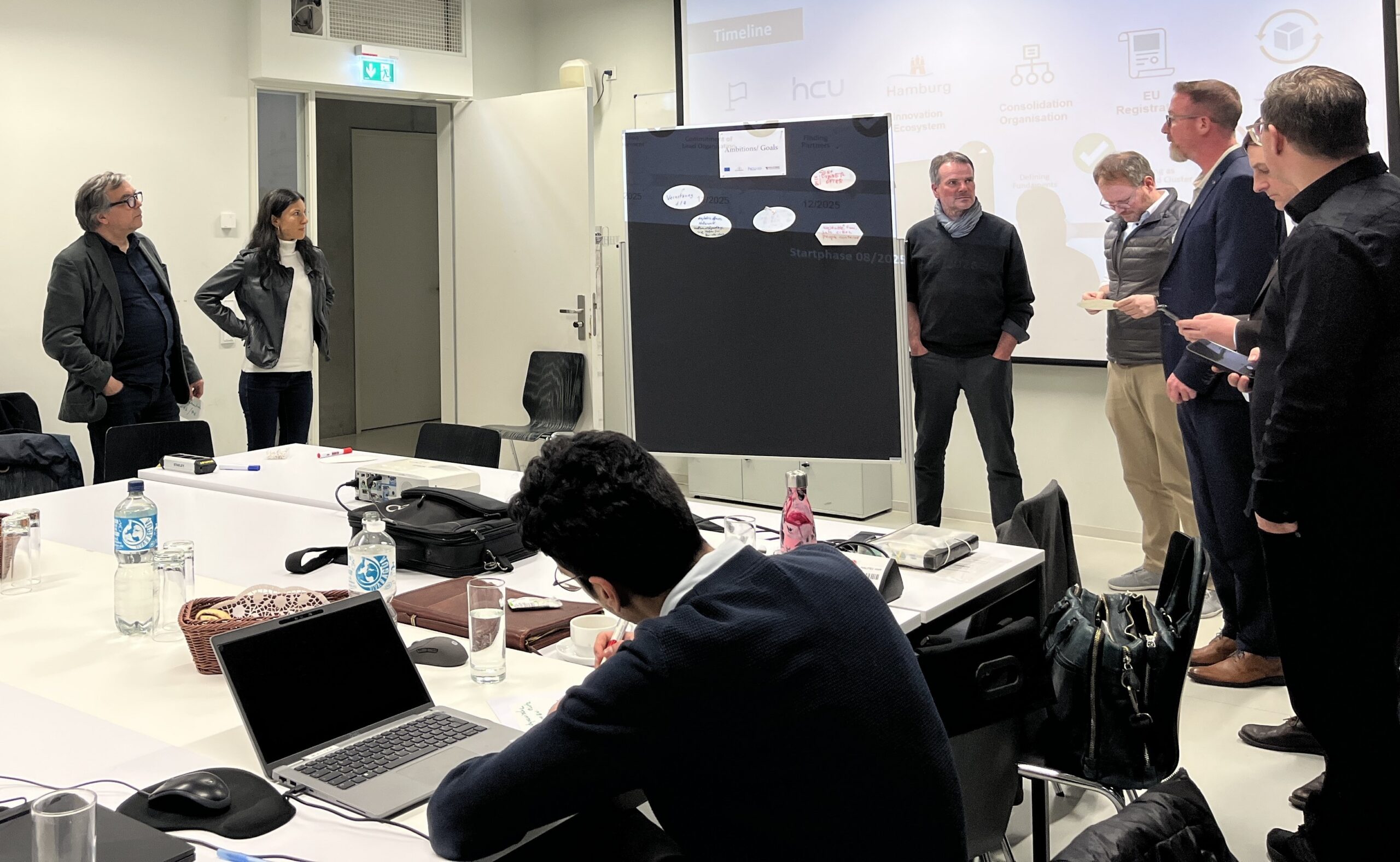
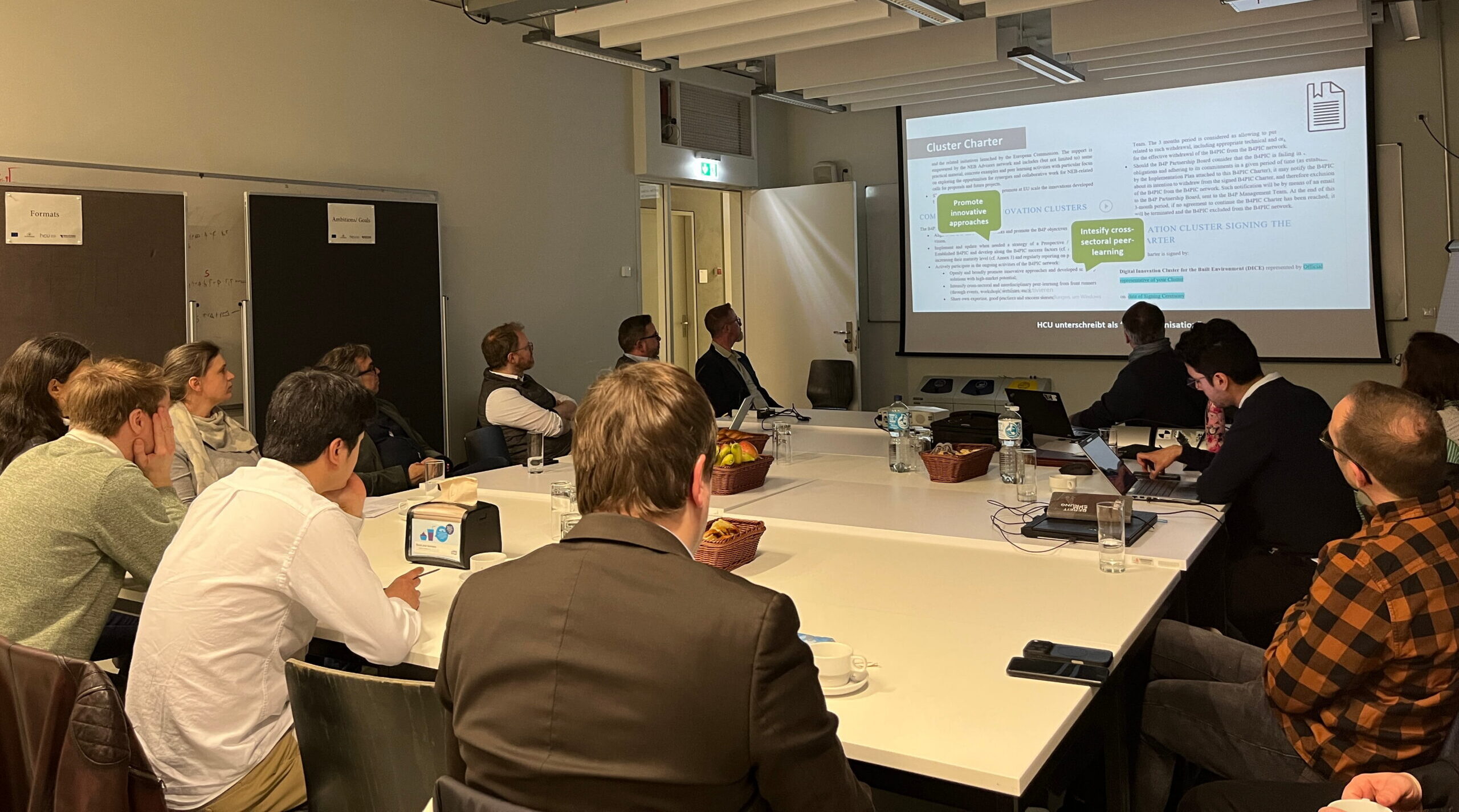
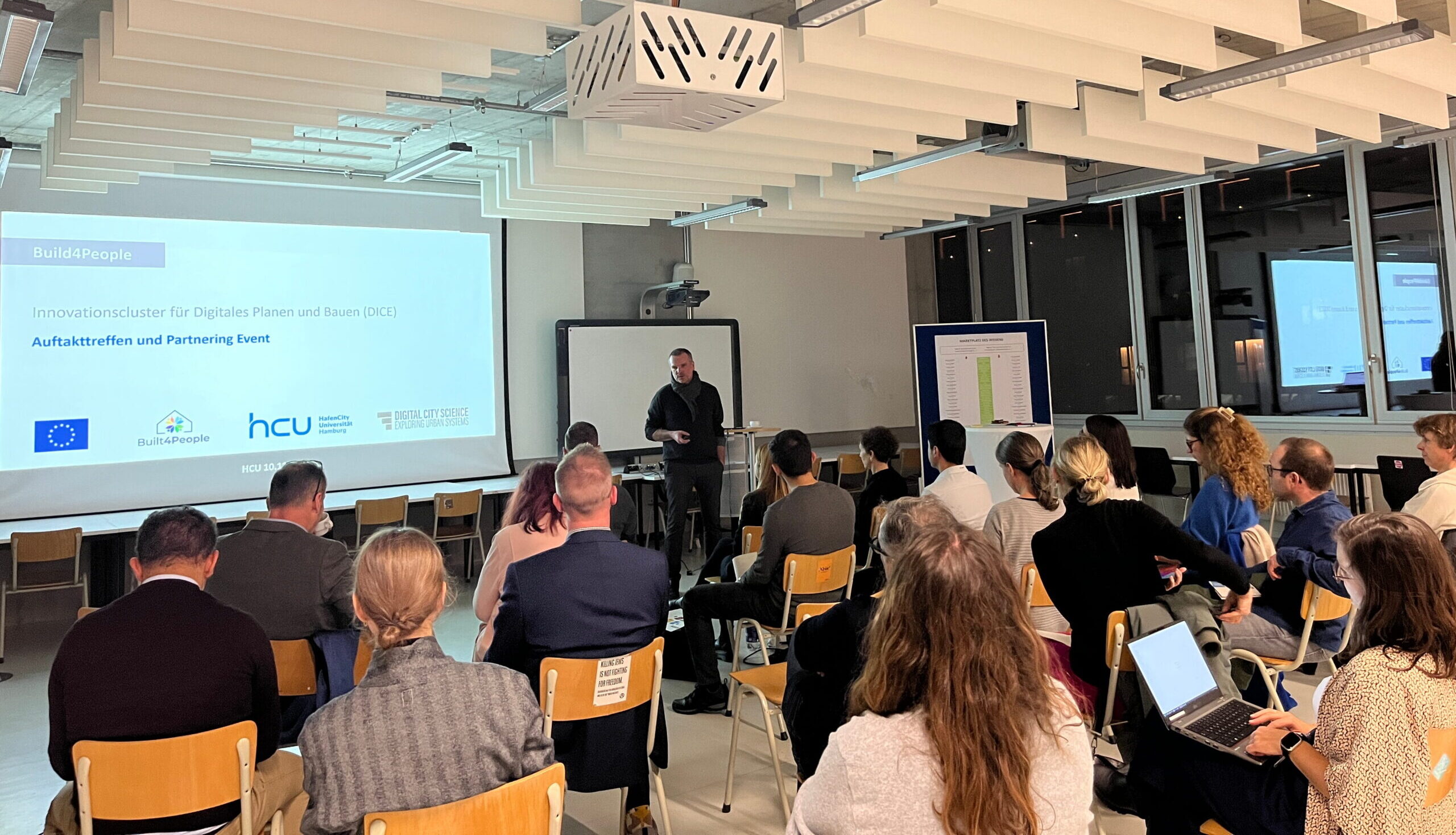
The DICE Consolidation Workshop, which took place on 20 March 2026, marked the transition from network formation to cluster development. Participants worked on defining the long-term vision, governance structures, thematic priorities, and future activities of the Digital Innovation Cluster for the Built Environment. Through presentations, collaborative discussions, and interactive working sessions, participants explored opportunities to strengthen cooperation across the entire value chain of planning, construction, and urban development.
A central outcome of the workshop was the identification of key ambitions for DICE. Participants emphasized the importance of creating an open innovation ecosystem that facilitates knowledge transfer, data exchange, and collaboration between research institutions, businesses, and public authorities.
Additional goals included supporting spin-offs and innovation transfer, establishing demonstrators and incubators, strengthening international cooperation, and developing a sustainable member-driven network that promotes people-centered and digitally enabled urban development.
The workshop also defined future innovation formats and thematic priorities for the cluster. Proposed activities include cross-cluster networking events, thematic working groups, stakeholder sparring sessions, shared knowledge databases, and collaborative innovation platforms. Key innovation themes discussed during the event included digital twins, connected construction sites, AI-assisted planning and construction processes, interoperable data ecosystems, lifecycle information management, and user-friendly digital standards. These discussions provide a foundation for future DICE initiatives, pilot projects, and collaborative funding proposals.
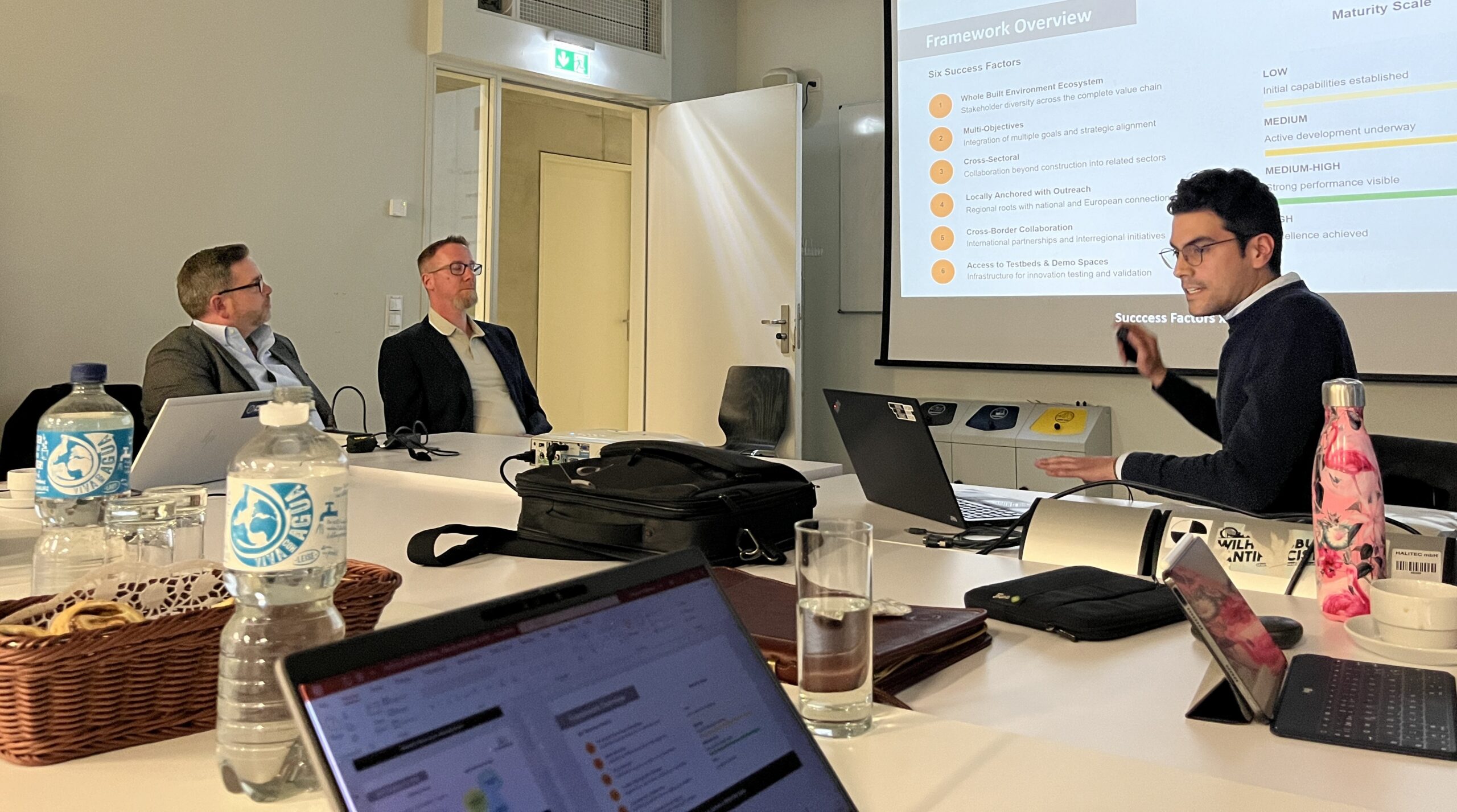
Networking and Matchmaking Workshop II
The second DICE Networking and Matchmaking Workshop, held on 10 December 2025, focused on identifying strategic priorities for the emerging cluster. Representatives from academia, industry, public administration, and innovation organizations participated in a series of structured exercises designed to assess the current state of Hamburg's digital planning and construction ecosystem and to identify future opportunities for collaboration.
The workshop concluded with a shared reflection on future priorities for the cluster and the role DICE can play in supporting innovation across the entire value chain of the built environment. Participants emphasized the importance of interdisciplinary collaboration, practical pilot projects, knowledge exchange, and stronger connections between research, public authorities, and industry. The outcomes of the workshop provided valuable input for defining thematic focus areas, strengthening the cluster’s network, and preparing future collaborative initiatives and funding opportunities under the Build4People framework and related European innovation programs.
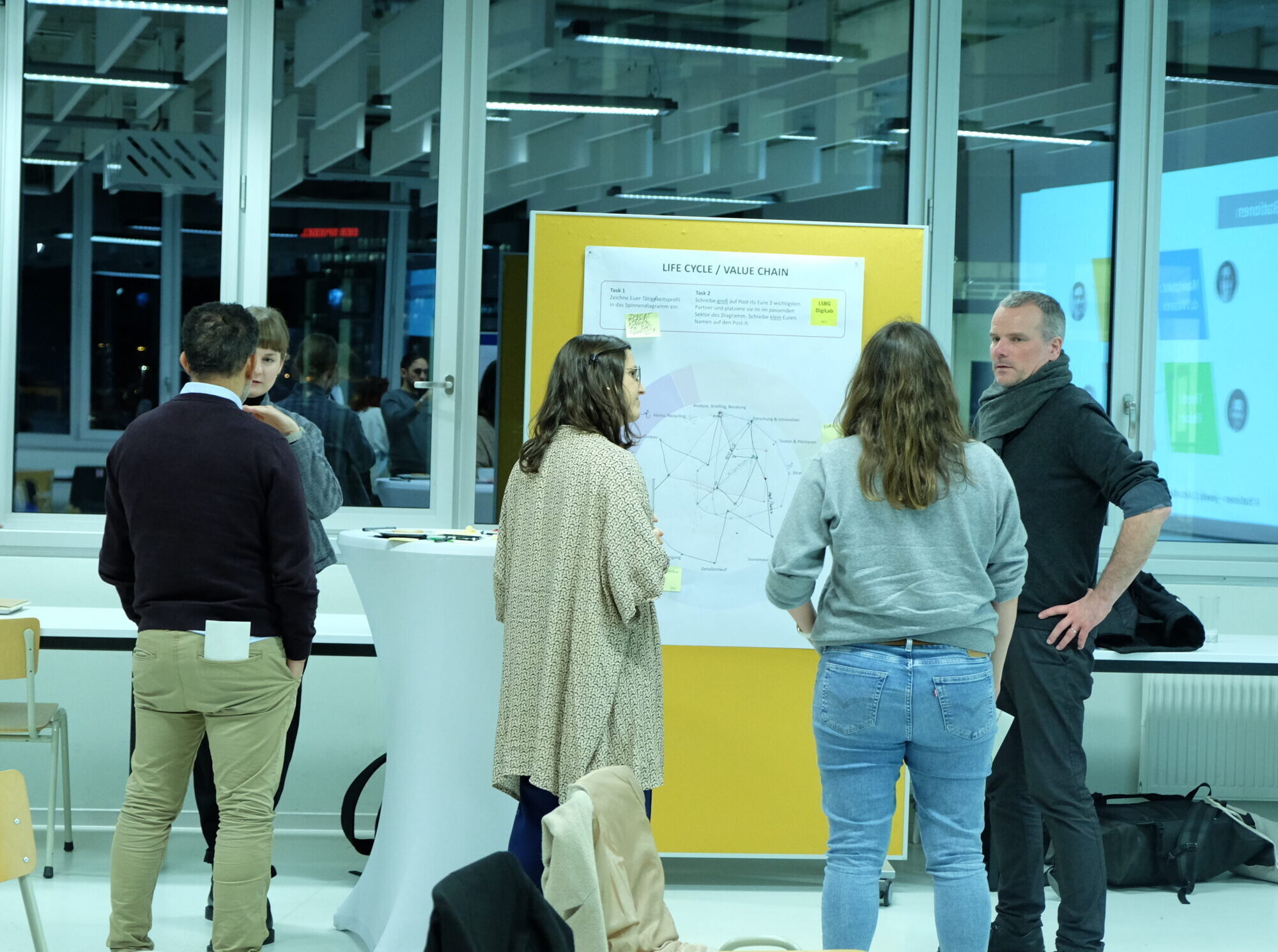
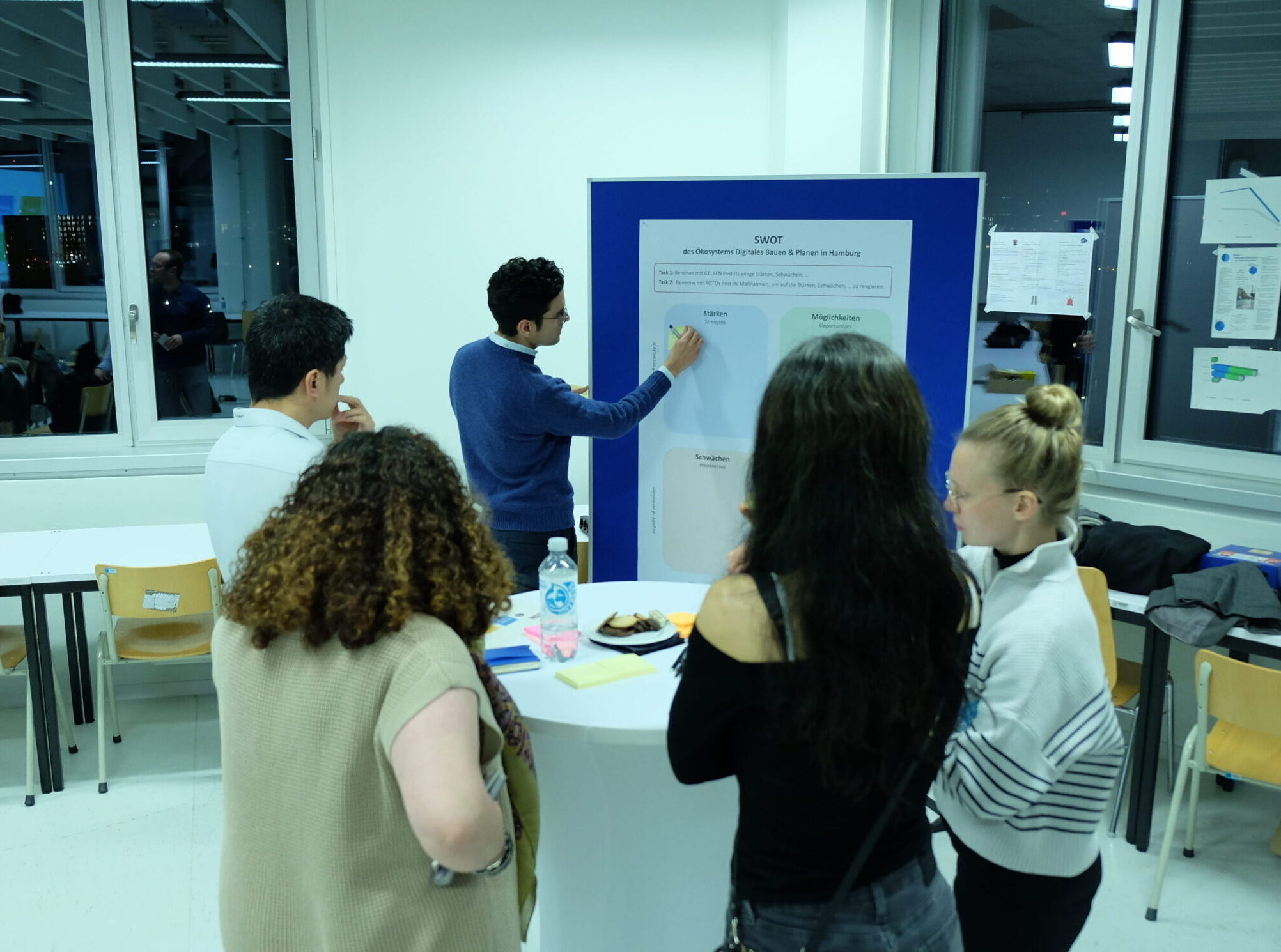
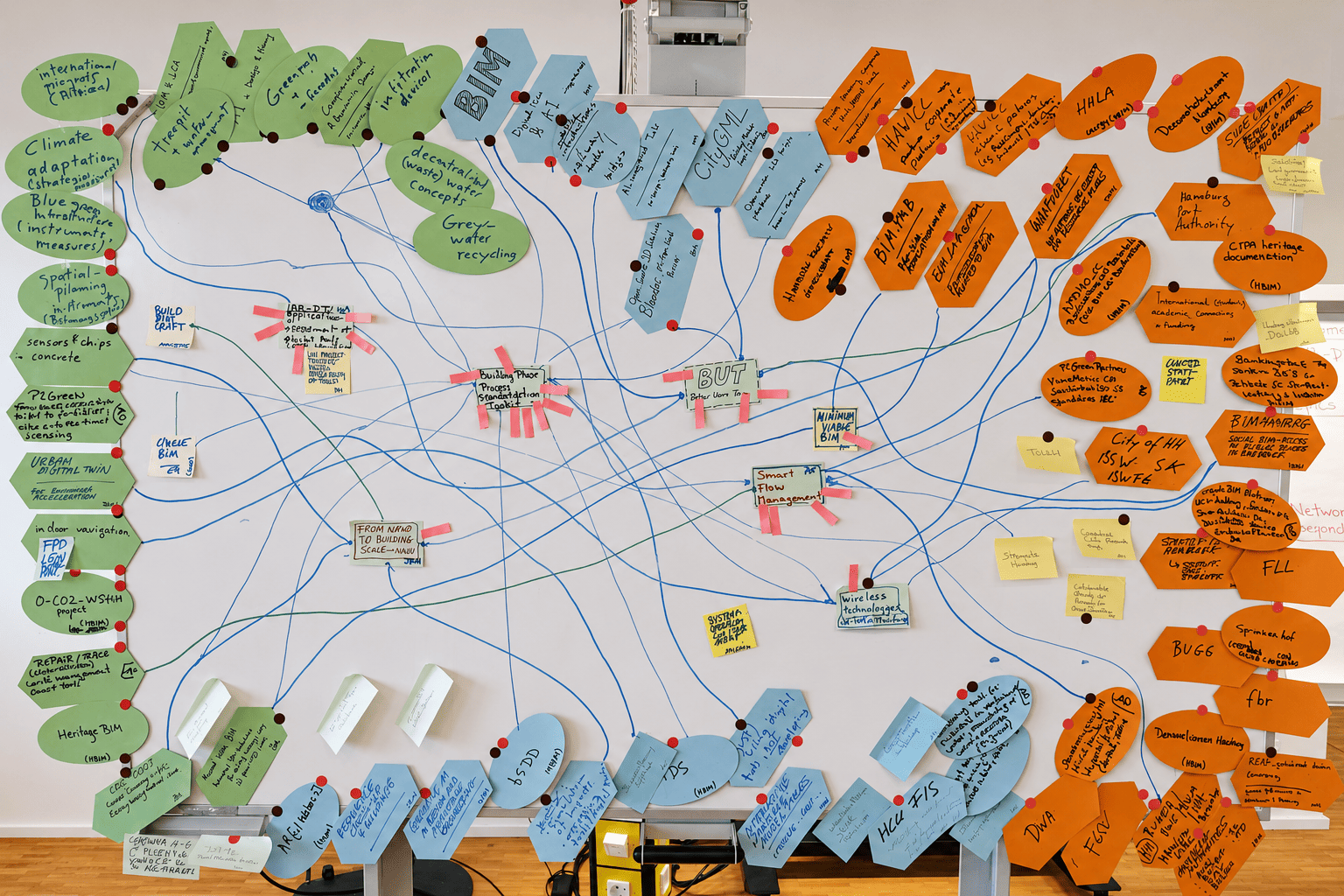
A central component of the workshop was a series of interactive working sessions designed to map expertise, identify knowledge gaps, and reveal opportunities for cooperation across the built environment sector. Through activities such as the "Marketplace of Knowledge," SWOT analysis, trend radar, and life-cycle mapping exercises, participants collectively assessed the strengths and challenges of Hamburg’s digital planning and construction ecosystem. The discussions highlighted strong expertise within the network in areas such as BIM, innovation, and artificial intelligence, while also identifying growing interest in simulation, testing and pilot projects, digital twins, funding networks, and emerging technologies.
Networking and Matchmaking Workshop I
The first Networking and Matchmaking Workshop (21 November 2025) brought together researchers, practitioners, and innovation stakeholders interested in shaping a Digital Innovation Cluster for the Built Environment within the framework of the Build4People initiative. Hosted at HafenCity University Hamburg, the workshop provided a platform for participants from academia, industry, and public organizations to introduce themselves, share their areas of expertise, and explore opportunities for future collaboration. The event began with presentations on the motivation and objectives of the initiative, followed by discussions on current challenges and emerging opportunities in the digital transformation of the built environment.
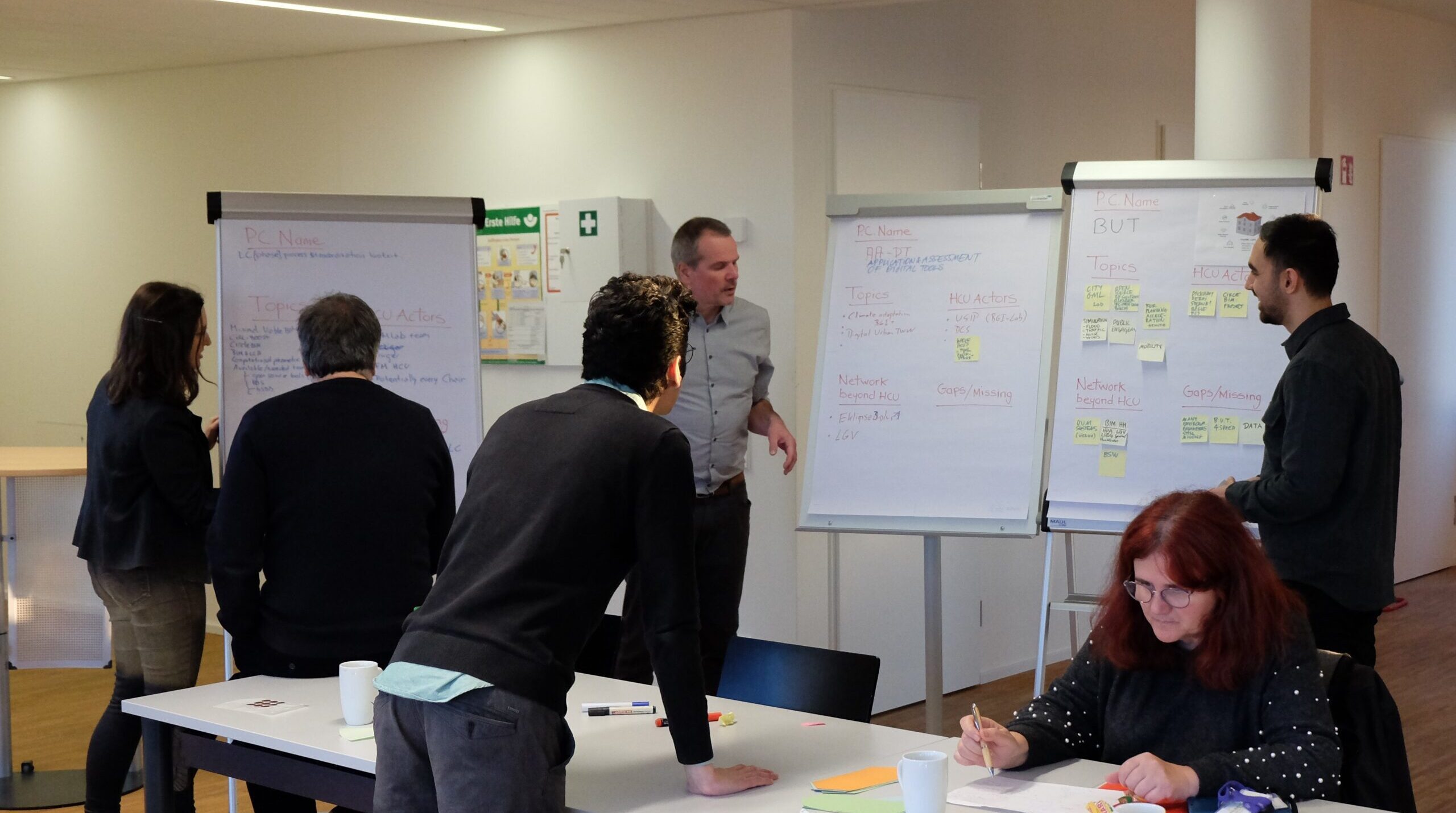
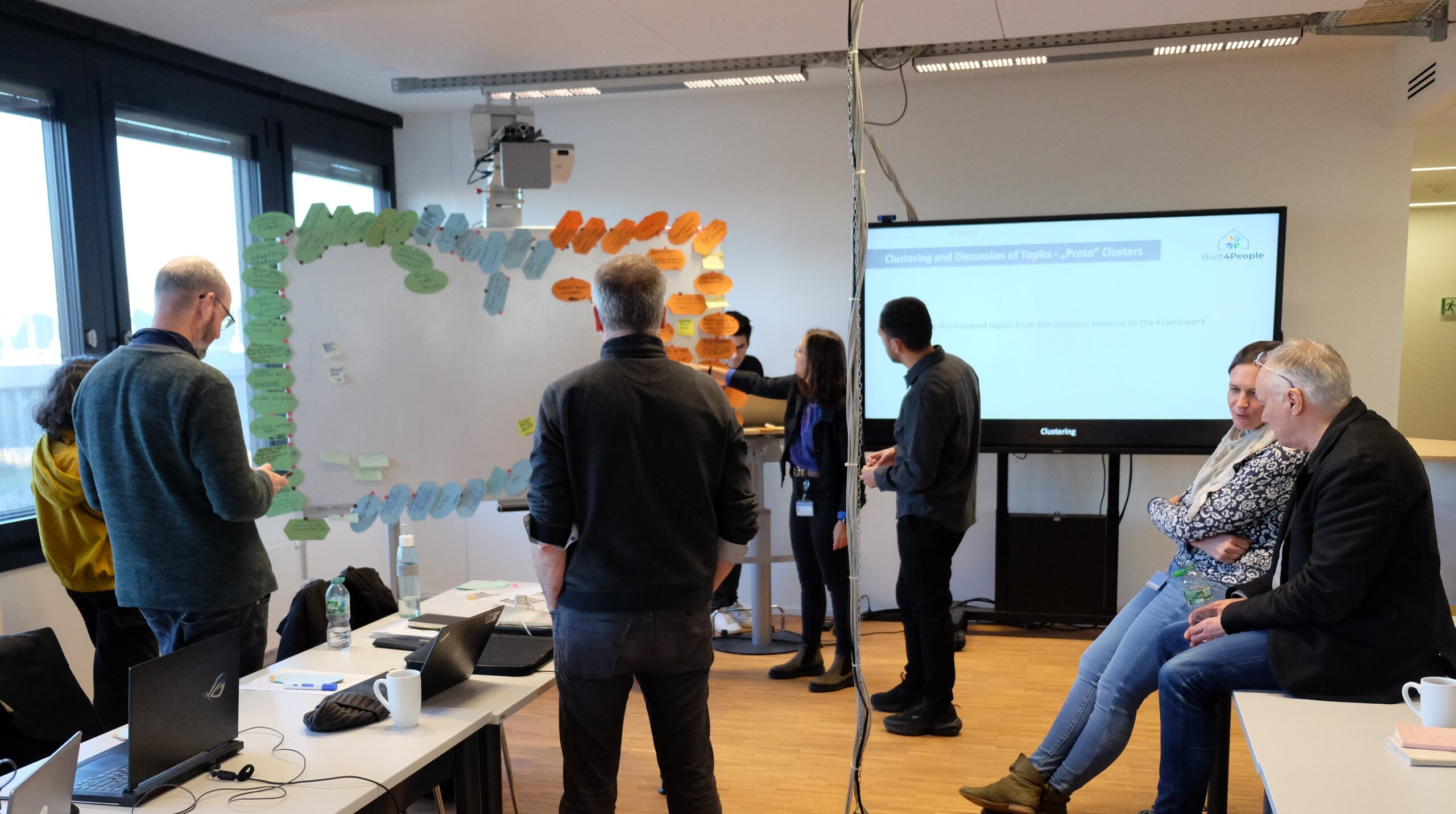
A central part of the workshop focused on mapping the research, innovation, and application landscape represented by the participants. Through interactive exercises, attendees identified ongoing projects, research interests, technological competencies, and societal challenges relevant to the built environment. Topics ranged from digital twins, BIM, smart cities, and urban data platforms to climate adaptation, circular construction, heritage documentation, AI applications, and sustainable urban development. By visualizing these topics and their interconnections, participants were able to identify overlapping interests, potential synergies, and areas where collaborative action could generate greater impact.
The workshop concluded with a collaborative clustering exercise in which participants grouped related topics into emerging thematic areas and discussed possible future directions for the network. These discussions helped establish a shared understanding of common priorities and highlighted opportunities for interdisciplinary cooperation across sectors. The results of the workshop provided an important foundation for the continued development of the Digital Innovation Cluster for the Built Environment, supporting future matchmaking activities, project generation, and the formation of partnerships capable of addressing complex challenges in cities, buildings, and infrastructure through digital innovation.